That’s a wrap on Last Call! I’m incredibly grateful and proud of what our team accomplished. We brought fresh stories and commentary to a tough time slot. It was an honor to stack and call a crazy hour of programming every weeknight for the past year and a half. I leave the show with many new friends and zero regrets.
Massive thank you to Brian Sullivan, my fellow producers and technical staff. Last Call was some of the smartest programming TV has seen in years because of you.
I’m going to take some time to look at new options – and examine the value I can bring to emerging, high-growth areas in media. While cable may face some difficulties – content remains king. My updated resume is visible on this page, as is my contact information.
I’ve been blown away by the kindness and encouraging comments from fans. This just adds to the pride I had in what we did.
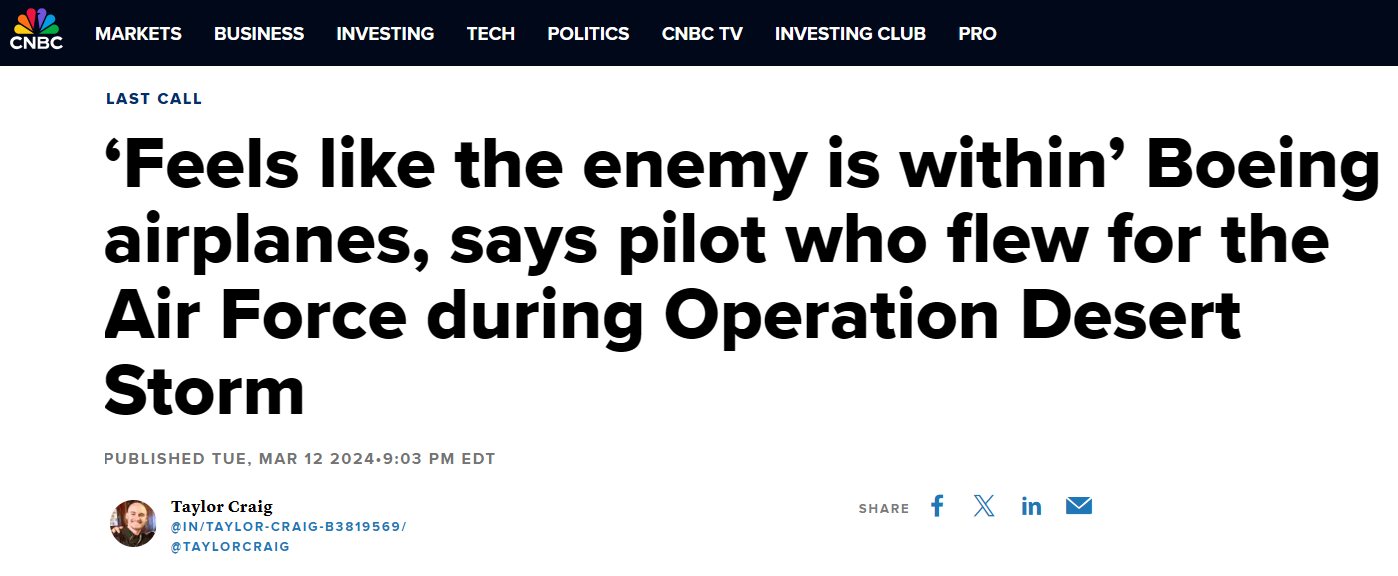
Boeing’s recent troubles have put some pilots on high alert when they enter the cockpit.
“It gives me even more pause when I get on the airplane,” Dennis Tajer, spokesperson for the Allied Pilots Association and a pilot for American Airlines, told CNBC’s Last Call on Tuesday. “And not a pause of concern of flying it – but making sure I’m watching it like a hawk.”
Multiple incidents involving Boeing planes have made headlines over the past several days, including one in which at least 50 people were injured on a 787 Dreamliner after passengers say it descended rapidly on a flight from Australia to New Zealand. The cause of that incident is under investigation, but carrier LATAM Airlines referred to it as a “technical event.”
“Every airline is basically fighting to ensure that their network plan is not undermined by this failure of Boeing,” said Tajer, a Boeing 737 captain. “And it changes every day.”
Despite the time he spent flying Boeing 707s in Desert Storm for the U.S. Air Force, Tajer said he thinks about the dangers of flying more than he ever has before.
“I was in the military and Boeing planes saved my tail many times in combat,” Tajer said. “The enemy was outside the airplane. Now it feels like the enemy is within.”
Context: After a years-long investigation into Tesla’s autopilot feature, NHTSA has ordered the company to recall 2 million of its vehicles. But all this means for Tesla is that they’ll have to issue an over-the-air software update to adjust the feature at no cost to owners.
While we originally planned to have this discussion around Tesla’s stock price, our host Brian Sullivan quickly honed in on the detail that many publishers were burying or outright ignoring.
Brian: “I think for most consumers, when they see the word ‘recall’ they assume something more serious than a software update.”
We had passionate Tesla investor Ross Gerber join Last Call to share his take on the issue that seems to repeat itself every few months.
Ross: “I do think it’s very misleading when the media runs headlines like 2 million cars being recalled. It certainly infers that there’s a negative financial impact to this — and there isn’t,” Gerber said. “The media must call Tesla for comment — as you guys do every time — and what do they say: nothing.”
“Why would the headlines be correct? How would the headlines be correct if they don’t correct them? So now you have me on tv and we try to get the right information out to consumers, to viewers, and to investors. Tesla doesn’t do this. So why?”
While Gerber’s point about Tesla lacking a PR department to thwart false narratives about the company is justified, I would place the onus for this miscommunication on business journalists. Media has a responsibility to fact-check the initial headlines it receives from government agencies, not rely on dated language. Just look at some of these headlines:
Credit to the Financial Times and our own network CNBC for framing the story accurately. While other publications’ headlines were factually correct, there is a responsibility to not omit vital details that would better inform the casual reader.
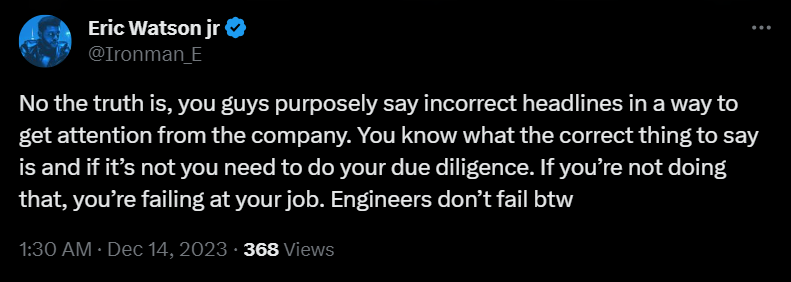
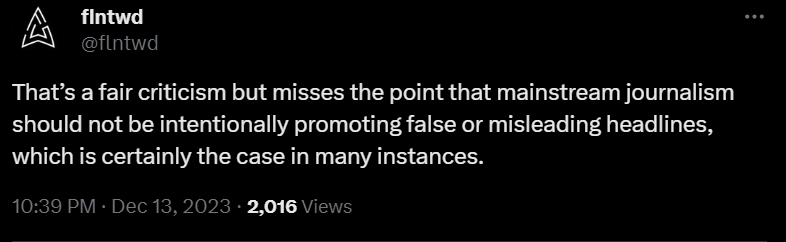
Rightfully so, Tesla enthusiasts were pissed — and don’t just suspect a lack of due diligence from media — but believe the error occurs repeatedly because of a concerted effort to smear Tesla.
These were replies to the Last Call interview posted to twitter. There is a complete lack of trust in business journalism. Tesla supporters feel jaded and even resort to criticizing the network that is pointing out the misinformation in the media ecosystem.
This is the cost of a media that prioritizes clicks over clarity.
In the control room during this live interview, even I noticed that our first headline didn’t have enough room to mention the software update. You’ll notice at 0:54 we change the banner (that has limited character space) to “TESLA ROLLS OUT AUTOPILOT UPDATE”.
You’d like to think this online backlash from Tesla believers would cause journalists to think twice about their headlines. All I can say from my team is that it won’t be a mistake you see on Last Call.



 TAYLOR CRAIG MEDIA