With Tesla reporting earnings on Tuesday, even the biggest Tesla bulls are expecting some letdown.
“I wouldn’t be surprised about some short-term upsets,” Tasha Keeney, ARK Invest’s Director of Investment Analysis, told CNBC’s Last Call on Monday. “But I think the long-term story is EVs are here to stay.”
ARK Invest’s current price target for Tesla stock is $2,000 by 2027. This aggressive projection implies an upside of 1,300% from Tesla’s closing price of $142 on Monday.
The electric vehicle maker’s shares fell for the seventh consecutive session on Monday after cutting prices on several models, sending the stock to a 15-month low.
“Tesla’s prices are so competitive,” Keeney said. “It’s going to be very hard for any other company to catch up to them at this point.”
Keeney emphasized that ARK Invest is focused on the long-term innovations Tesla is poised to capitalize on — like robotaxis.
“It’s single-handedly pushed forward the electric vehicle industry. I think it’s going to do the same for autonomous driving,” Keeney said. “So that’s what we’re focused on — that long-term story.”
Context: After a years-long investigation into Tesla’s autopilot feature, NHTSA has ordered the company to recall 2 million of its vehicles. But all this means for Tesla is that they’ll have to issue an over-the-air software update to adjust the feature at no cost to owners.
While we originally planned to have this discussion around Tesla’s stock price, our host Brian Sullivan quickly honed in on the detail that many publishers were burying or outright ignoring.
Brian: “I think for most consumers, when they see the word ‘recall’ they assume something more serious than a software update.”
We had passionate Tesla investor Ross Gerber join Last Call to share his take on the issue that seems to repeat itself every few months.
Ross: “I do think it’s very misleading when the media runs headlines like 2 million cars being recalled. It certainly infers that there’s a negative financial impact to this — and there isn’t,” Gerber said. “The media must call Tesla for comment — as you guys do every time — and what do they say: nothing.”
“Why would the headlines be correct? How would the headlines be correct if they don’t correct them? So now you have me on tv and we try to get the right information out to consumers, to viewers, and to investors. Tesla doesn’t do this. So why?”
While Gerber’s point about Tesla lacking a PR department to thwart false narratives about the company is justified, I would place the onus for this miscommunication on business journalists. Media has a responsibility to fact-check the initial headlines it receives from government agencies, not rely on dated language. Just look at some of these headlines:
Credit to the Financial Times and our own network CNBC for framing the story accurately. While other publications’ headlines were factually correct, there is a responsibility to not omit vital details that would better inform the casual reader.
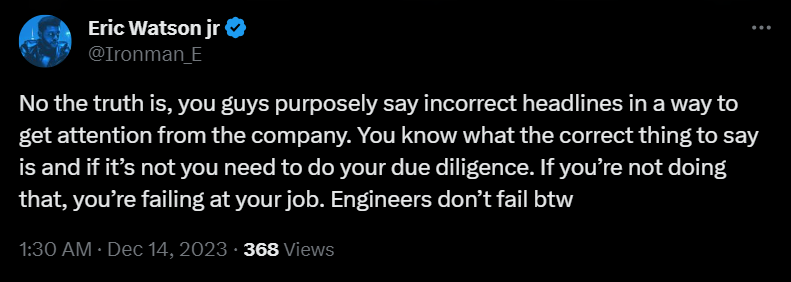
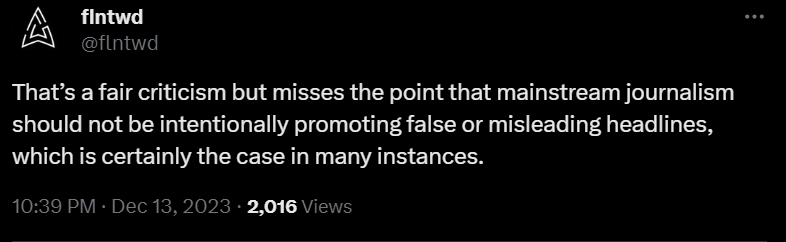
Rightfully so, Tesla enthusiasts were pissed — and don’t just suspect a lack of due diligence from media — but believe the error occurs repeatedly because of a concerted effort to smear Tesla.
These were replies to the Last Call interview posted to twitter. There is a complete lack of trust in business journalism. Tesla supporters feel jaded and even resort to criticizing the network that is pointing out the misinformation in the media ecosystem.
This is the cost of a media that prioritizes clicks over clarity.
In the control room during this live interview, even I noticed that our first headline didn’t have enough room to mention the software update. You’ll notice at 0:54 we change the banner (that has limited character space) to “TESLA ROLLS OUT AUTOPILOT UPDATE”.
You’d like to think this online backlash from Tesla believers would cause journalists to think twice about their headlines. All I can say from my team is that it won’t be a mistake you see on Last Call.



 TAYLOR CRAIG MEDIA